Part 2 – The Evolution of Envelope Performance
Part 2 – The Evolution of Envelope Performance

From Code to Culture
You can read the energy code, apply it, and get boxed in.
Or you can read the energy code, understand it, and unlock design possibilities.
At DiMella Shaffer, we choose the latter.
Developing a firm-wide mindset about building envelopes is not about checking boxes; it’s about collaboration and curiosity.
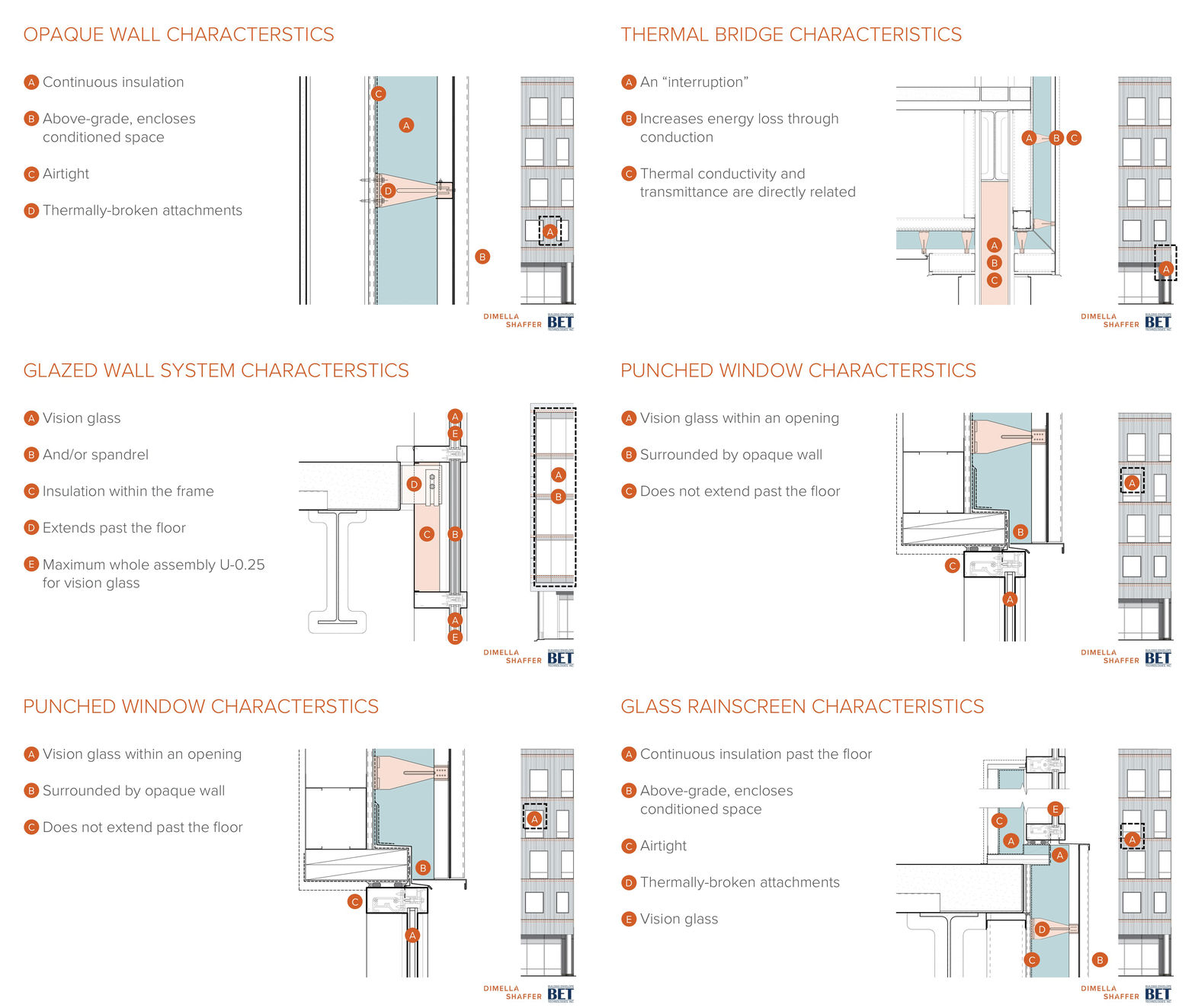
In the past, energy codes followed a basic approach to the envelope that lacked a key ingredient: comprehensive thermal bridging analysis. Today, with thermal bridging calculations embedded in the Massachusetts Stretch Code, we are required to evaluate the building envelope as a whole system. It’s no longer about finding wall insulation or window values in a table. It’s about how everything works together—wall assemblies, windows, linear transitions, and thermal breaks.
What We Have Learned
1. Understand the Fundamentals.
We start with the basics. Using the energy code map and decision trees, we chart compliance paths alongside the technical requirements and dive into the envelope strategy early.
The 2025 Massachusetts Stretch Code Amendments, in effect from February, clarify when the envelope backstop calculation is required. This calculation sets a limit on how much heat can be transmitted across the entire envelope by balancing walls with window performance.
Now, we turn to the core questions:
What is in an opaque wall? A glazed wall? A punched window?
It is not about memorizing the code. It’s about understanding it and applying it with intention
2. Start Early.
From concept design through construction documents, we test and refine the envelope backstop calculation.
a. Often, we start with a representative of the facade in the early design.
b. In design development, we run the full calculation and update as needed.
c. By the time we reach construction documents, the calculation is refined and finalized.
This early and iterative process gives us the room to stay creative and flexible.
3. Find Balance.
Design intent and performance don’t have to compete. We seek solutions that balance aesthetics, internal and external loads, electrification goals, and envelope performance with cost-effectiveness in mind.
• Transparency at the ground floor doesn’t need to dictate the rest of the facade.
• Design strategies for punched windows can enhance the perception of openness without relying solely on glass.
• Remember: when it comes to performance, continuous insulation beats spandrel every time!
4. Be Creative.
There is no single answer—and that’s the beauty of this work. From glass rainscreens and over-insulation to staying current on the advancement of thermal break products, we remain curious and open. There is always a way forward.
The expertise doesn’t just live with the person holding the red pen. It’s a team that can spot a thermal bridge from a mile away—and knows how to solve it.
Yes, there is math. But there’s also design.
We ask questions.
We seek understanding.
And only then do we find the right balance.